
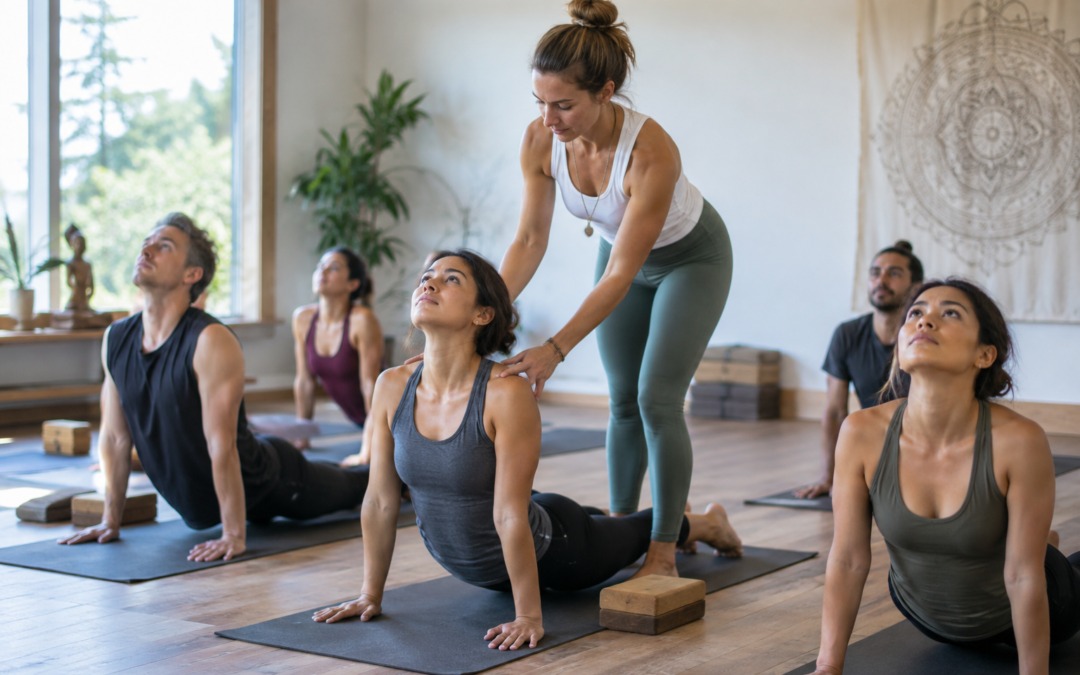
A standard 200hr yoga teacher training provides foundational instruction in posture alignment, human anatomy, teaching methodology, yoga philosophy, and practical sequencing. Students complete guided coursework, personal practice, and supervised practice teaching to earn a foundational certification qualifying them to teach group classes or pursue opportunities like private yoga instruction.
Overview of a 200hr Yoga Teacher Training Curriculum
A 200hr yoga teacher training is structured to transform dedicated practitioners into knowledgeable instructors by covering five core educational categories. Established standards allocate these hours across techniques and practice, anatomy and physiology, yoga humanities, and professional essentials including practice teaching and student observation.
During the program, trainees study postural alignment, verbal cueing, adjustments, and class structure. Comprehensive coursework ensures that graduates develop a deep understanding of physical postures alongside subtle body concepts, breathwork practices, and meditation techniques. Programs hosted through Jennifer Vafakos Yoga emphasize clear instruction, safety, and personalized feedback for students located across Manasquan NJ, Wall NJ, and surrounding shore communities.
Anatomy, Physiology, and Biomechanics in 200 Hrs Yoga Teacher Training
Anatomy and biomechanics form a major pillar of any accredited 200 hrs yoga teacher training curriculum. Trainees learn major muscle groups, joint mechanics, skeletal variations, and movement patterns to guide students safely through physical postures while preventing common injuries.
In addition to physical anatomy, programs cover physiological systems such as nervous system regulation, respiratory function, and stress response mechanisms. Understanding how movement and breath influence bodily systems helps instructors create balanced, restorative, and energizing classes tailored to diverse physical capabilities. Integrating correct usage of yoga props during anatomy modules further helps trainees modify postures for varied body types and mobility levels.
History, Philosophy, and Ethics in Yoga 200 Hr Teacher Training
Yoga philosophy introduces trainees to traditional foundational texts, historic origins, and ethical codes that inform modern practice. In a yoga 200 hr teacher training, students examine classical guidelines such as the Yamas and Niyamas from the Yoga Sutras, which provide framework for self-reflection and professional ethical conduct.
Studying these historical roots enriches a teacher’s perspective beyond physical exercise. Trainees explore how traditional concepts apply to everyday life, teaching environments, and student interaction. Studying recommended yoga books during training helps students contextualize ancient wisdom within modern teaching, fostering authentic communication and mindful group facilitation.
Practice Teaching, Sequencing, and Instructional Methodology
Practical instruction forms the core of teaching methodology, where students transition from learning yoga concepts to leading classes. Trainees practice drafting intelligent class sequences, refining voice projection, mastering clear verbal cues, and offering safe physical or energetic adjustments.
Supervised practice teaching allows students to instruct peers in short segments, gradually expanding into full-length class simulations. Detailed constructive feedback from lead instructors helps trainees refine their pacing, confidence, and class management skills. This hands-on experience prepares candidates who wish to become a yoga teacher with real-world skills needed to lead public classes, workshops, or private yoga classes in Belmar NJ and nearby coastal areas.
Prerequisites and Physical Requirements: Do You Need to Be Advanced?
Enrolling in a 200 hour yoga teacher training does not require advanced physical flexibility or mastery of complex arm balances. Admissions focus primarily on a dedicated personal practice, an open mindset, and a genuine desire to learn the foundational principles of yoga.
Most training programs welcome participants of varied experience levels, ages, and physical abilities. The curriculum emphasizes inclusive instruction, teaching students how to adapt postures to fit individual bodies rather than forcing bodies into rigid shapes. Passion for study and commitment to consistent attendance are far more critical to successful completion than executing advanced poses.
Course Formats and Time Commitments for NJ Shore Students
Course structures for a 200hr yoga teacher training typically offer flexible formats, including intensive immersion programs or weekend modules spread across several months. Weekend schedules often accommodate working professionals and local residents near Spring Lake, Brielle NJ, and Wall NJ who balance career or family commitments while completing training hours.
Students complete direct contact hours led by qualified faculty along with non-contact hours dedicated to reading assignments, journaling, self-practice, and class observations. Choosing a local program allows shore residents to complete coursework close to home while building connections with local studios and fellow trainees.
Certification and Next Steps After Completing Your Training
Upon successful completion of all required contact hours, assessments, and practical teaching exams, graduates receive a certificate of completion from the training school. This certificate validates that the student has fulfilled standard educational criteria for entry-level yoga instruction.
With this credential, graduates can register with international teacher registries if desired, obtain professional liability insurance, and begin applying for teaching positions. Training graduates are equipped to teach group movement sessions, lead specialized community workshops, or establish private instruction services throughout the New Jersey shore region.