
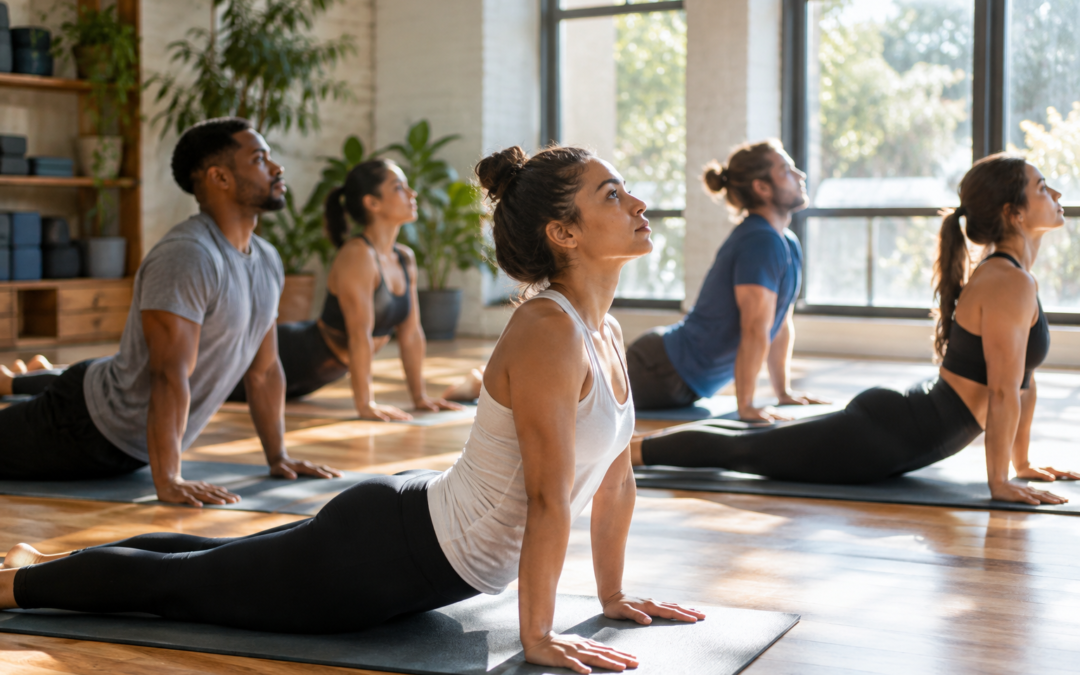
Vinyasa yoga classes focus on linking dynamic continuous movement with conscious breath, creating a fluid sequence of postures designed to build heat, strength, and spatial awareness. Students move seamlessly between postures using rhythmic inhalations and exhalations, making this style standard in modern studio settings for both cardiovascular stamina and physical conditioning.
What Are Vinyasa Yoga Classes?
Vinyasa yoga classes are dynamic movement sessions characterized by coordinating physical postures with intentional breath control. The term vinyasa translates loosely from Sanskrit as placing something in a specific, purposeful way. In a modern movement studio, this translates into flowing sequences where each posture transitions directly into the next, guided by an inhale or an exhale.
Unlike static movement disciplines where students hold a single posture for extended durations, vinyasa creates continuous motion. This fluid pacing generates internal body heat, enhances cardiovascular conditioning, and improves functional joint mobility. Practitioners learn to view the transitions between poses with as much intention and alignment awareness as the individual postures themselves.
Because instructors design custom sequences for each session, no two vinyasa flow sessions are identical. This variety keeps practitioners mentally engaged, challenges balance across multiple planes of movement, and prevents repetitive stress injuries by continually altering physical movement patterns.
How Vinyasa Yoga Classes Differ From Hatha Yoga Classes and Heat Yoga Classes
Vinyasa yoga classes differ significantly from hatha yoga classes in pacing, flow, and structural design. While hatha yoga classes focus on static posture holds, foundational alignment mechanics, and deliberate pauses between poses, vinyasa emphasizes seamless transitions and continuous cardiovascular engagement. Hatha provides an excellent environment for learning individual posture geometry, whereas vinyasa challenges your body to maintain breath control while transitioning fluidly through movement cycles.
Vinyasa also stands apart from heat yoga classes, which take place in artificially heated rooms often set between 90 and 105 degrees Fahrenheit. While heat yoga classes rely on ambient room temperature to elevate heart rates and loosen connective tissue, traditional vinyasa generates physical warmth internally through sustained muscular effort, core stabilization, and rhythmic Ujjayi breathing techniques.
Choosing between these formats depends on personal conditioning goals, thermal tolerance, and movement preferences. Many students combine gentle foundational movement with active vinyasa flow to build both precision and endurance across their overall movement routine.
Do You Need Flexibility or Prior Experience for Vinyasa Flow?
You do not need flexibility or prior movement experience to attend vinyasa yoga classes. Flexibility is an outcome of consistent movement practice rather than a requirement for stepping onto the mat. Beginners often worry that fast-paced transitions require advanced athleticism, but qualified instructors offer structured posture modifications and prop options for every conditioning level.
If you are exploring beginner yoga, understanding that every posture can be adapted is key to building physical confidence. Instructors regularly invite students to take rest in Child’s Pose or Modify Downward-Facing Dog whenever the continuous pacing feels demanding or overwhelming.
Approaching your first sessions with curiosity rather than performance expectations allows your nervous system to adjust to breath synchronization. Over time, consistent practice develops functional range of motion, core stability, and movement confidence at your own natural pace.
The Core Structure of a Standard Vinyasa Class
A typical 60-minute vinyasa class follows a deliberate five-stage structure designed to warm the body safely, build toward a physical peak, and cool down the nervous system. Understanding this routine helps prospective students feel grounded and prepared from the moment they unroll their mat.
The session begins with centering and breath preparation. Students sit or lie comfortably while establishing deep abdominal breathing or rhythmic Ujjayi breath. This initial phase shifts focus away from daily stressors and tunes attention into physical sensations and respiratory cadence.
Next, the class moves into warm-up sequences, typically featuring Sun Salutations (Surya Namaskar). These repetitive movement cycles synchronize forward bends, plank positions, and gentle backbends with breath rhythms, progressively heating muscles, lubricating spinal joints, and elevating the heart rate.
The main portion of class consists of standing and balancing flows. Instructors link warrior postures, side angles, lunges, and single-leg balance positions into creative combinations. This phase builds lower body strength, improves pelvic stability, and sharpens mental concentration.
Following the standing sequences, the class transitions to floor-based postures for cooling down. Deep hip openers, seated forward folds, and gentle spinal twists release muscular tension built during active flow patterns. The session concludes with Savasana (Final Relaxation), allowing the central nervous system to quiet down and digest the physical exertion of the practice.
Essential Equipment and Yoga Props for Vinyasa Practice
Preparing for a successful vinyasa session involves choosing comfortable, stretchable attire and supportive movement accessories. Because vinyasa involves frequent inversions, forward bends, and dynamic transitions, wearing form-fitting, moisture-wicking clothing prevents fabric from riding up or interfering with posture transitions.
Using quality yoga props helps maintain integrity and proper bone alignment during fast-moving flow sequences. High-density foam or cork blocks bring the floor closer to your hands in standing poses like Half Moon or Triangle Pose, reducing strain on lower back muscles and hamstring tendons.
A durable, non-slip sticky mat provides essential traction for hands and feet during transitional movements like stepping back into plank or pushing back into Downward-Facing Dog. Cotton straps and folded blankets can also assist in extending reach or offering joint cushioning during floor postures.
Understanding the Standard Vinyasa Transition Sequence
In many vinyasa yoga classes, instructors use the phrase take a vinyasa to invite students through a standardized four-part transition sequence between standing posture sides. Mastering this foundational movement cluster helps students move efficiently without straining shoulders or wrists.
The sequence begins in High Plank Pose, establishing a firm upper body foundation with active core engagement, neutral spine alignment, and grounded hands. From plank, students lower down into Chaturanga Dandasana (Four-Limbed Staff Pose), bending elbows to a 90-degree angle while hugging upper arms close to the ribcage.
From Chaturanga, the chest rolls forward and upward into Upward-Facing Dog or Cobra Pose, lifting the heart while pressing tops of the feet into the mat. Finally, the hips press upward and back into Downward-Facing Dog, completing the reset transition before starting the next posture flow.
Beginners can easily modify this sequence by lowering knees to the floor during Chaturanga or choosing a low Cobra Pose to build shoulder strength gradually without compromising lumbar spine safety.
Mental and Physical Benefits of Dynamic Flow Practice
Regular participation in vinyasa yoga classes yields balanced physical and mental benefits. Muscularly, the continuous supporting of body weight across varied spatial angles strengthens core stabilizers, shoulder girdles, gluteal muscles, and hamstrings in a balanced, functional manner.
Cardiovascular health is enhanced as rhythmic breathing coupled with active movement elevated target heart rates into a sustained aerobic zone. This gentle endurance training builds stamina while improving blood circulation and oxygen delivery across connective tissues.
Mentally, vinyasa serves as a moving meditation. The requirement to synchronize each breath count with specific bodily movements demands total present-moment awareness, quieting intrusive thoughts and resetting stress response pathways in the brain.
Practicing Vinyasa Yoga with Jennifer Vafakos Yoga in New Jersey
Finding thoughtful, technique-focused instruction ensures your vinyasa practice remains safe, sustainable, and highly rewarding over time. At Jennifer Vafakos Yoga, practitioners receive expert alignment guidance tailored to their unique anatomical structures, injury histories, and personal mobility goals.
Whether you are seeking personalized private instruction or small-group movement coaching in local communities like Manasquan NJ, Wall NJ, Brielle NJ, or Belmar NJ, tailored alignment direction helps you master transitional mechanics safely. Working with an experienced instructor ensures you build robust strength, protect joint health, and enjoy every step of your movement journey.