
Last updated
Selecting premier vinyasa yoga studios requires evaluating teacher credentials, room setup, pacing structure, and studio environment. High-quality vinyasa yoga studios offer certified instructors skilled in breath-linked sequencing, adequate floor spacing, proper climate control, well-maintained props, and clear modifications for all experience levels, ensuring a balanced, safe practice for every student.
Key Features of High-Quality Vinyasa Yoga Studios
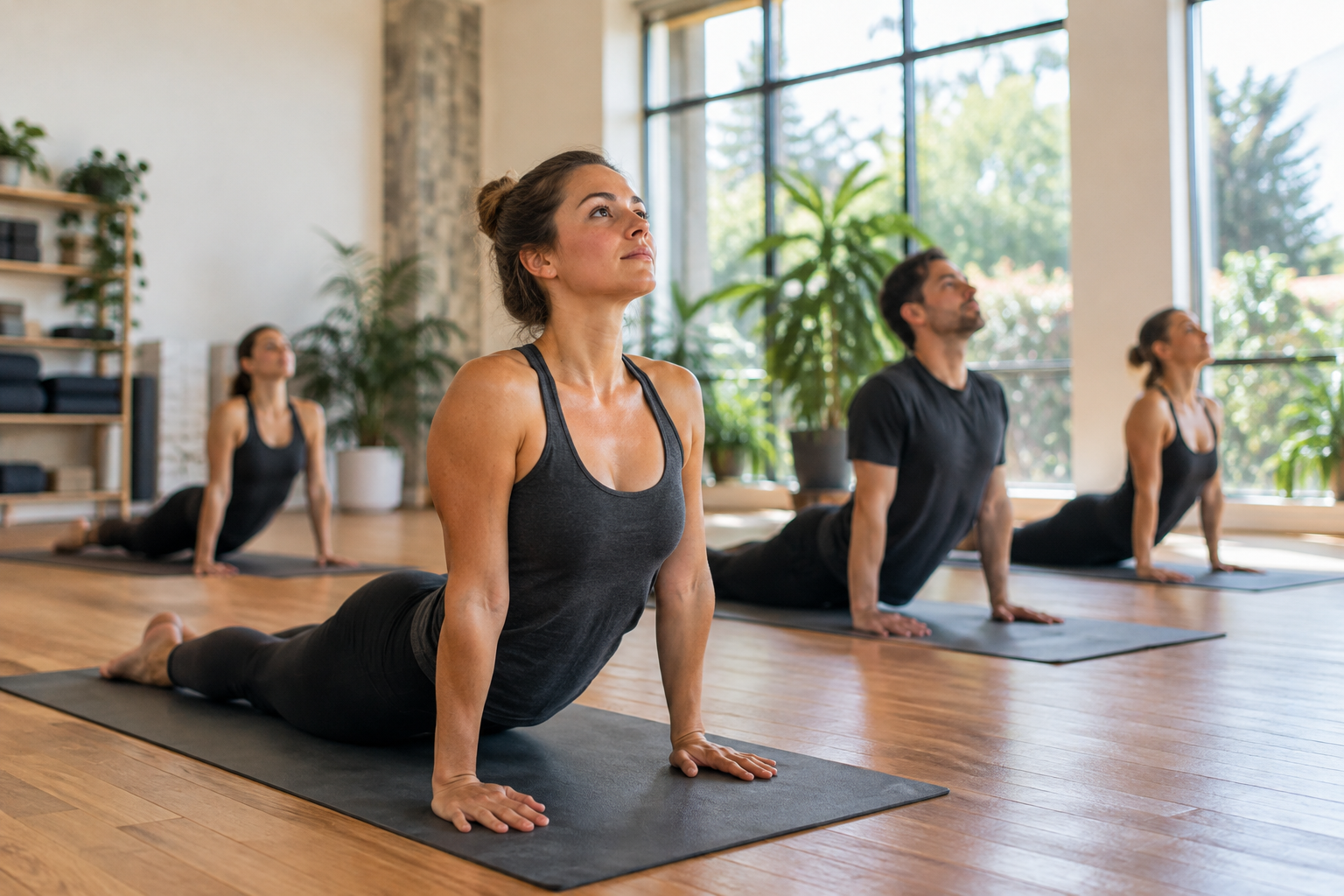
Finding top-tier vinyasa yoga studios involves assessing the physical studio atmosphere, space design, and room conditioning. Vinyasa practice generates substantial internal heat through continuous movement and rhythmic breathing, which means optimal ventilation and ambient climate management are essential. Superior studios maintain consistent temperature controls that keep the space warm enough to support joint mobility without becoming excessively hot or humid, unless explicitly designed as dedicated hot vinyasa environments.
Flooring and layout play an equally critical role in studio safety and practitioner comfort. Hardwood, specialized cushioned laminate, or dense sports-flooring surfaces provide crucial wrist and knee support during repeated transitions like chaturangas and downward-facing dogs. Additionally, quality studios structure mat placement so that students retain ample physical buffer space on all sides. This spaciousness prevents crowding during wide stance transitions, lateral stretches, and arm balances, fostering a focused and comfortable movement environment.
Evaluating Teacher Credentials and Instructional Pacing
Evaluating instructor qualifications is a cornerstone of choosing a studio that prioritizes practitioner health and progression. A registered yoga teacher with formal 200-hour or 500-hour credentials from an accredited program brings foundational knowledge of human anatomy, biomechanics, and sequence design. When observing a class, notice whether the instructor offers clear anatomical cueing, offers verbal options for differing abilities, and demonstrates safe alignment principles rather than simply calling out pose names in rapid succession.
Instructional pacing directly influences both class safety and physical benefit. Effective vinyasa teaching balances fluid, breath-synchronized sequences with deliberate pauses that allow students to refine alignment and establish stability. Excellent teachers monitor student energy in real time, adjusting sequence intensity and offering restful counter-poses when needed. At Jennifer Vafakos Yoga, instructional emphasis centers on precise technique, mindful breath management, and self-care, helping students build sustainable movement habits whether practicing in local Jersey Shore communities like Manasquan, Wall, Brielle, or Belmar, or training in dedicated teacher programs.
Comparing Vinyasa Yoga Classes with Hatha Yoga Classes
Understanding the difference between dynamic vinyasa yoga classes and traditional hatha yoga classes helps practitioners select the environment that aligns with their personal physical goals. Vinyasa flows prioritize continuous rhythm, seamlessly linking inhalations and exhalations with fluid transitions between postures. This continuous movement style builds cardiovascular endurance, muscular stamina, and kinetic coordination, making it ideal for those who thrive in energizing, dynamic movement settings.
In contrast, standard hatha yoga classes focus on static posture holds, foundational alignment breakdown, and deliberate breath control without rapid transitions. While vinyasa incorporates many of the same foundational postures found in hatha, the continuous sequencing creates a distinct movement experience that demands heightened spatial awareness and core integration. Studios that clearly define these stylistic distinctions on their schedules allow students to choose classes that best match their daily physical capacity and energy needs.
Essential Studio Amenities and Equipment Standards
A quality studio environment extends beyond the practice room floor to encompass comprehensive amenities and well-maintained equipment. Clean, organized storage areas for personal belongings, dedicated changing rooms, and hygienic mat sanitization stations demonstrate a studio’s operational rigor. Furthermore, high standards of cleanliness across common spaces, restrooms, and main practice floors protect student hygiene and create an inviting atmosphere for daily practice.
High-density yoga props are an essential amenity for any serious vinyasa environment. Studios should provide durable cork or high-density foam blocks, firm cotton straps, woven blankets, and supportive bolsters. Having clean, accessible props readily available allows students of all skill levels to modify challenging posture transitions, support tight joints, and maintain optimal spinal alignment throughout fluid flow sequences.
How Vinyasa Yoga Studios Adapt Flows for Diverse Skill Levels
High-caliber studios ensure that vinyasa sequences remain accessible and challenging for diverse student populations through multi-level teaching strategies. Rather than teaching a single rigid sequence, experienced instructors offer layered options for complex postures. For instance, an instructor may demonstrate a foundational variation first, then invite advanced students to explore full variations or arm balances while offering supportive prop options for those seeking stability.
Effective flow adaptation also relies on proactive verbal cues and individual observation. Instructors who actively move around the room can offer subtle alignment adjustments, suggest block placements under hands, or guide students into child’s pose when rest is required. This inclusive approach empowers beginner yoga practitioners to build strength at a comfortable pace while giving seasoned yogis room to deepen their practice safely.
Class Size, Community Culture, and Schedule Variety
Class size directly impacts the level of individual attention and guidance a practitioner receives during dynamic sequences. Studios that cap class attendance ensure that instructors can visually monitor every student, offering timely alignment corrections and personalized modifications. Smaller class settings foster a welcoming community atmosphere where students feel comfortable asking questions, discussing mobility goals, and engaging with teachers before and after sessions.
Schedule diversity is another hallmark of exceptional studios. A balanced schedule features early morning energizing flows, mid-day mobility sessions, and evening gentle or restorative classes. Offering varied class times, diverse teaching styles, and seamless online booking enables practitioners in coastal Monmouth County locations such as Manasquan, Wall, Brielle, and Belmar to maintain a consistent, sustainable yoga routine despite busy weekly schedules.
Choosing Between Group Studio Classes and Private Instruction
Deciding between group studio flows and tailored one-on-one sessions depends on your individual movement requirements, learning style, and health background. Group settings provide vibrant group energy, diverse flow sequences, and a strong sense of community connection. They offer an ideal environment for practitioners seeking consistent movement routines and shared physical motivation.
However, students recovering from injuries, addressing chronic movement limitations, or seeking rapid refinement of foundational technique often benefit significantly from private yoga classes. One-on-one instruction allows a dedicated teacher to customize sequence pacing, introduce targeted alignment adjustments, and construct personal sequences tailored specifically to your body’s unique anatomy and fitness goals.