
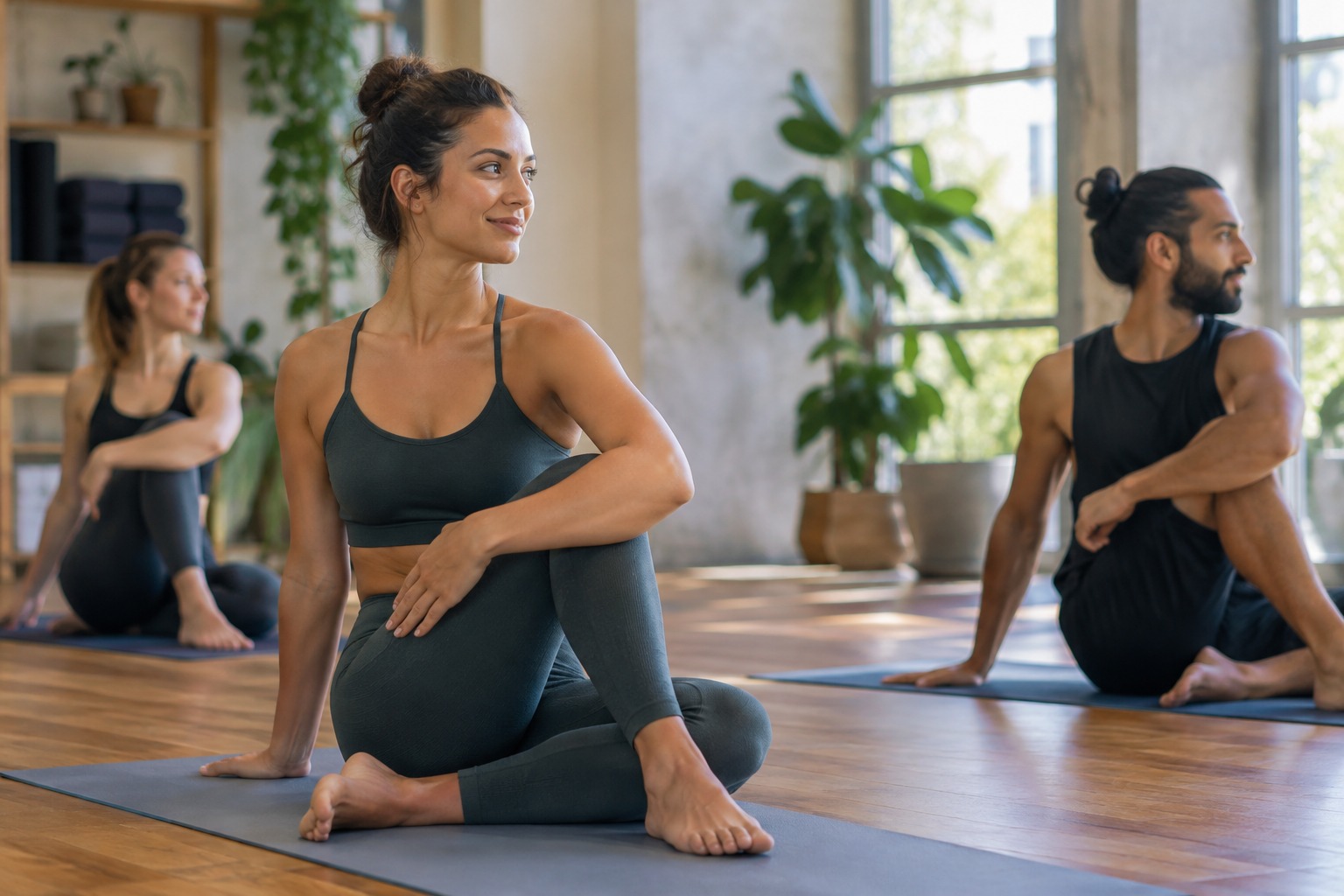
Knowing what to wear for yoga classes comes down to choosing stretchable, form-fitting, and breathable apparel that moves seamlessly with your body during movement. Opt for moisture-wicking synthetic blends or soft flexible cotton, high-waisted leggings or athletic shorts, and a fitted top that stays secure during inversions. Studio yoga is traditionally practiced barefoot on clean mats.
Key Principles of What to Wear for Yoga Classes
Preparing for your initial experience in a studio setting starts with prioritizing breathability, flexibility, and physical comfort. When deciding what to wear for yoga classes for the first time, your primary clothing objective is unhindered movement. Standard street clothes, heavy denims, and rigid outdoor gear restrict full joint articulation and impede deep abdominal breathing. Selecting lightweight garments designed for four-way stretch ensures that your clothing bends, stretches, and stays secure across every pose without requiring continuous manual adjustment.
Moisture management is another essential principle for studio comfort. Active movement generates heat, even in moderate temperature environments. Technical synthetic fabrics—such as polyester, nylon, and spandex blends—effectively pull sweat away from your skin toward the surface of the material where it quickly evaporates. According to the Mayo Clinic exercise clothing guide, choosing breathable, moisture-wicking apparel helps regulate body temperature and prevents skin chafing during sustained physical exertion.
Fit precision plays an equally critical role in studio success. Garments should sit comfortably close to your torso and legs without feeling restrictive or pinching at the waistline. Loose, oversized tops tend to shift upside down during forward folds or head-below-heart postures, creating unwanted distractions during class. Form-fitting shirts or tops tucked securely into your waistband keep your focus entirely on movement and alignment.
Essential Top and Bottom Selections for Beginning Yoga Classes
Building a reliable studio outfit begins with selecting the right combination of tops and bottoms. For upper body attire, a snug athletic tank top, fitted short-sleeve tee, or supportive sports bra serves as an ideal base layer. Look for tops with flatlock seam construction, which minimizes friction against the ribs and underarms during repetitive arm movements. Female practitioners generally prefer medium-support sports bras that hold securely without tight elastic digging into the shoulder blades.
For lower body attire, flexible high-waisted leggings, athletic capris, or fitted joggers are the most popular choices for a first yoga class. High-waisted bands prevent bottoms from sliding downward during lunges, squats, or floor transitions. Before heading to the studio, perform a quick squat test at home in well-lit lighting to ensure your leggings remain fully opaque when stretched across the hips and glutes. Practitioners who prefer shorts should choose athletic styles with a built-in liner or compressive base layer to maintain coverage in wide-legged postures.
For students attending classes along the New Jersey Shore in communities like Manasquan NJ, Wall NJ, and Brielle NJ, ocean breezes and seasonal humidity shifts make versatile wardrobe choices particularly valuable. Having durable, well-fitting core apparel allows you to transition comfortably from warm coastal breezes outdoors into serene climate-controlled studio spaces.
Footwear, Grip Socks, and Studio Floor Etiquette
A common question among new studio visitors centers on proper footwear. Studio yoga is traditionally practiced completely barefoot. Practicing without shoes or standard socks allows the soles of your feet to make direct, textured contact with your mat, promoting natural foot articulation, toe spreading, and enhanced balance. Upon arriving at local studios in areas like Belmar NJ, shoes and street footwear are placed in designated cubbies outside the main movement room to maintain pristine floor cleanliness.
While barefoot practice remains the gold standard, specialized grip socks featuring silicone tread on the soles offer an effective alternative for specific needs. If you experience naturally cool feet, suffer from foot hypersensitivity, or tend to sweat heavily on smooth mats, grip socks provide non-slip traction while maintaining hygienic floor coverage. Standard everyday cotton dress socks or athletic tube socks should be avoided on the mat, as smooth cotton glides easily over rubberized surfaces and increases slip risk.
Prioritizing proper foot hygiene and leaving street footwear in warm-up lounges helps maintain a clean, grounded environment for every student sharing the room. Walking barefoot on studio floors builds intrinsic foot strength, strengthens ankle stabilization, and reinforces sensory connection during standing poses.
Clothing to Avoid During Studio Yoga Sessions
Knowing what not to wear is just as important as selecting the correct pieces. Loose, billowy cotton t-shirts without structure frequently fall forward into your neck or face during downward-facing dogs, disrupting breath flow and sightlines. Rigid denim shorts, jeans, cargo pants, or trousers with bulky metal zippers, snaps, or buttons can press uncomfortably into your hips and spine during seated or prone floor exercises.
Extreme outerwear, such as heavy fleece sweaters or non-breathable vinyl warm-up jackets, should be set aside once warm-up sequences conclude. Furthermore, excessively loose or dangling jewelry—including long necklaces, large hoop earrings, and wrist bangles—can catch on clothing, snap during arm sweeps, or cause noisy distractions. According to American Council on Exercise fitness attire guidelines, eliminating loose accessories and unneeded layers maximizes freedom of movement and keeps safety paramount during group fitness sessions.
Fragrance etiquette is another vital consideration. Avoid heavy perfumes, body sprays, or scented lotions prior to entering the studio space. Deep diaphragmatic breathing is central to practice, and strong artificial scents can trigger sensitivities or respiratory discomfort for nearby students in enclosed studio spaces.
What to Wear for Yoga Classes Across Different Studio Formats
Different movement disciplines demand slight variations in your attire strategy. In active, continuous flow environments such as vinyasa yoga classes, body heat rises rapidly. For these dynamic classes, lightweight, moisture-wicking synthetic tank tops and high-waisted shorts or technical leggings prevent overheating and allow rapid sweat evaporation as sequences build intensity.
Conversely, slower restorative environments like yin yoga classes involve longer, passive holds on the floor where core body temperatures naturally cool down. For gentle or meditative sessions, comfort and warmth take precedence. Soft cotton long-sleeve layers, flexible jogger pants, and cozy socks keep joints supple and muscles relaxed throughout extended floor rests.
Layering is the ultimate solution for adapting to changing studio climates across Monmouth County. Arriving with a light zip-up hoodie or cardigan over your fitted tank top allows you to remain cozy during warm-ups, strip down to base layers during active movement, and pull soft layers back on before final relaxation (Savasana).
Comparing Studio Attire Options for Yoga Practitioners
Selecting the optimal studio outfit depends on your preferred class style, personal comfort, and movement goals. The comparison table below highlights standard attire categories to guide your studio selection.
| Attire Category | Best For | Key Benefits | Drawbacks & Considerations | Cost & Quality Drivers |
|---|---|---|---|---|
| Form-Fitting Synthetic Activewear | Dynamic flows, warm studios, active sweat management | Moisture-wicking, four-way stretch, stays secure during inversions | Requires delicate wash care; synthetic feel may not suit sensitive skin | Advanced technical weaves, antimicrobial treatments, flatlock stitching |
| Relaxed Cotton & Natural Blends | Restorative holds, gentle mobility, meditative sessions | Soft tactile feel, highly breathable, gentle skin contact | Retains moisture when sweating; loose tops shift during inversions | Organic fabric sourcing, cotton weight, garment dye quality |
| Layered Outerwear & Wraps | Studio arrival, cool coastal mornings, Savasana warmth | Maintains joint warmth during cooldowns; versatile seasonal style | Must be removed during vigorous active sequences to avoid bulk | Fleece density, zipper durability, tailored stretch inserts |
Form-Fitting Synthetic Activewear: Best for energetic vinyasa sessions where sweat control and form tracking are paramount. While synthetic sets carry higher technical costs due to advanced moisture-wicking fabric engineering, their durability and shape retention make them a long-lasting studio investment.
Relaxed Cotton Blends: Best for beginning yoga classes focusing on gentle alignment and quiet relaxation. Cotton offers unmatched natural softness, though it absorbs sweat rather than repelling it, making it less ideal for high-intensity sweating.
Layered Outerwear: Best for transitional comfort before and after practice. High-quality layers protect warm muscles from cool outdoor air, ensuring smooth physical transitions from street to studio.
Understanding what to wear for yoga classes makes your studio transition seamless, ensuring that non-functional clothing never distracts from your physical growth or inner focus. If your personal fitness goals lean toward heavy weightlifting, rigid footwear, or high-impact plyometric training, standard yoga studio attire and calm movement environments may not be the right fit. However, for those seeking improved joint mobility, core stability, and mindful breathwork, proper clothing sets the foundation for a rewarding practice.
Preparing for Your Studio Practice with Jennifer Vafakos Yoga
Beyond selecting comfortable clothing, bringing a personal yoga mat, water bottle, and small hand towel ensures you are completely prepared for your session. Experiencing personalized movement guidance from jennifer vafakos yoga helps students of all experience levels refine their alignment, select tailored modifications, and gain confidence in a supportive studio setting.
Whether you are attending group sessions in Manasquan NJ or exploring individualized instruction across Wall NJ and Belmar NJ, dressing in flexible, breathable attire allows you to move with freedom, ease, and complete peace of mind.