
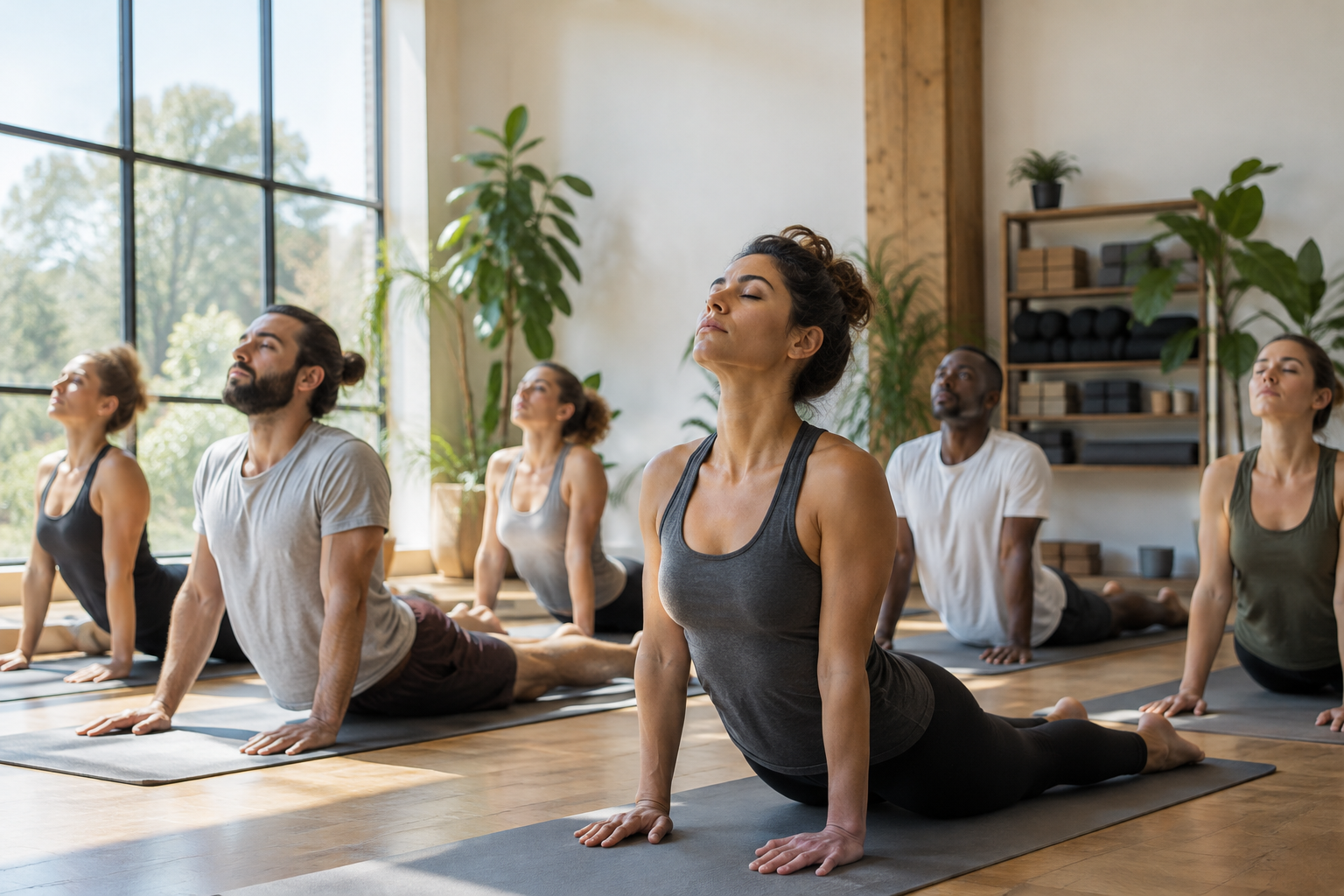
Hatha yoga classes focus on foundational physical postures held for deliberate durations paired with conscious breathing exercises. Characterized by a steady, measured pace, these studio sessions emphasize joint mobility, core stability, and precise body alignment. By separating postures rather than flowing rapidly between them, Hatha yoga offers an accessible entry point for beginners while providing experienced practitioners with a refined framework for technique mastery.
Understanding Hatha Yoga Classes: Principles and Pacing
Historically, the term Hatha represents the balance between active and receptive energy, where ha signifies sun and tha signifies moon. In modern studio settings, hatha yoga classes translate this ancient duality into physical movement and controlled breathwork. Unlike rapid dynamic practices, a traditional Hatha session moves at a deliberate speed. Instructors introduce individual postures, guide students into proper anatomical alignment, and hold each position for anywhere from three to eight deep breaths before transitioning to a brief resting pause.
This deliberate pacing allows practitioners to explore the biomechanics of each pose without rushing through transitions. During static holds, students learn to engage stabilizing muscles, maintain spinal lengthening, and cultivate physical presence. Hatha sessions prioritize structural integrity over continuous momentum, ensuring that every participant builds physical strength while reducing the risk of strain or joint compensation.
Fundamental Postures and Breathing Techniques Taught in Class
A typical Hatha practice incorporates a well-balanced progression of classical physical postures (asanas) and breath control techniques (pranayama). Sequences usually begin with gentle warm-up movements for the spine, shoulders, and hips, transitioning into standing poses such as Mountain Pose (Tadasana), Warrior I and II (Virabhadrasana), and Triangle Pose (Trikonasana). These standing postures build leg strength, refine balance, and improve overall spatial awareness.
As the session progresses, instructors introduce seated forward folds, hip openers, gentle backbends like Cobra or Bridge, and floor-based core work. Alongside physical postures, breathing exercises play a central role. Techniques such as Three-Part Breath (Dirga Pranayama) and Alternate Nostril Breathing (Nadi Shodhana) are taught to regulate the nervous system and improve mental focus. Utilizing targeted yoga props, including foam blocks, woven straps, and blankets, ensures that every posture remains accessible regardless of individual hamstring or hip flexibility.
Why Beginning Yoga Practitioners Excel in Hatha Classes
For individuals searching for beginning yoga classes, the Hatha format provides one of the safest and most supportive entry points available. Because the instructor breaks down each posture step by step, new students have ample time to listen to verbal cues, observe demonstration adjustments, and set up their footing correctly. There is no expectation to memorize complex choreography or synchronize fast-paced movements with every inhale and exhale.
Many people delay attending studio sessions out of fear that they lack sufficient flexibility or athletic experience. However, entering a beginner yoga environment centered on Hatha principles removes this pressure. Modifications are routinely offered for every skill level, allowing complete beginners to build foundational strength, flexibility, and confidence at a manageable speed.
Comparing Hatha Yoga Classes to Vinyasa Yoga
Understanding the distinction between Hatha and other studio styles helps practitioners choose the format that best aligns with their wellness goals. When comparing Hatha with vinyasa yoga classes, the primary difference lies in transition speed and continuous movement. Vinyasa links breath directly with movement in a fluid, continuous flow where postures shift smoothly from one to the next, generating significant cardiovascular heat.
In contrast, Hatha treats each pose as a distinct posture with clear start and finish points. While Vinyasa emphasizes rhythmic cadence and stamina, Hatha prioritizes static endurance, body alignment, and refined muscular activation. Practitioners seeking a dynamic cardio-infused session often gravitate toward Vinyasa, whereas those who prefer clear instruction, steady holds, and alignment feedback thrive in Hatha settings.
How Hatha Differs from Restorative and Yin Yoga Styles
While Hatha is more measured than dynamic flow styles, it remains an active physical practice. This distinguishes it from passive formats like yin yoga classes and restorative sessions. In Yin practice, students hold floor postures passively for three to five minutes to target deep fascia and connective tissue without active muscular contraction. Restorative yoga uses extensive prop support to induce complete nervous system relaxation with zero physical exertion.
Hatha yoga, by comparison, requires active muscular engagement to support spinal alignment and joint stability. Practitioners actively press through their feet, engage core muscles, and maintain posture structure. Integrating active Hatha practice with passive restorative styles provides a balanced approach to overall physical resilience and recovery.
Physical and Neurological Benefits of Regular Hatha Practice
Consistent participation in Hatha sessions yields wide-ranging physical and mental health improvements. Musculoskeletally, holding static postures strengthens core muscles, stabilizes major joint complexes, and lengthens tight muscle groups like hamstrings, hip flexors, and shoulders. Improved alignment directly reduces functional lower back strain and supports healthy daily posture.
From a neurological perspective, the deliberate breathwork and mindfulness emphasized throughout Hatha practice activate the parasympathetic nervous system. Slowing the breath rate helps lower elevated heart rates, reduces circulating stress hormones, and sharpens mental clarity. Students leave class with a heightened sense of physical groundedness and calm focus that carries into daily activities.
How to Prepare for Your First Hatha Yoga Studio Class
Preparing effectively for your first yoga class helps ensure a comfortable and rewarding experience. Wear form-fitting, stretchable clothing that allows full hip and shoulder movement without excess fabric getting in the way. Arrive at the studio ten to fifteen minutes prior to class to meet your instructor, settle onto your mat, and communicate any pre-existing injuries, joint sensitivities, or physical limitations.
Staying hydrated throughout the day prior to class is recommended, though avoiding heavy meals within two hours before practice helps prevent discomfort during forward bends and twists. Bring a refillable water bottle and a personal sticky mat if you have one, though most studios supply quality mats and props. For practitioners desiring individualized attention prior to joining group sessions, scheduling private yoga classes in Manasquan, NJ provides one-on-one postural evaluation and personalized setup tips.
Finding Quality Yoga Instruction Along the New Jersey Shore
For residents across Manasquan, Wall, Brielle, and Belmar, NJ, finding expert yoga instruction is key to establishing a safe and sustainable practice. At Inlet Yoga Studio, managing director Jennifer Vafakos and her team of experienced instructors provide clear, alignment-focused guidance tailored to students of all experience levels. Whether you are seeking foundational Hatha instruction, dynamic Vinyasa, or deeply relaxing Yin practice, working with a qualified teacher ensures proper technique and supportive growth.
By understanding the distinct qualities of Hatha yoga classes, practitioners can confidently choose the class style that matches their current energy levels, physical needs, and personal goals. Establishing a balanced movement routine fosters lasting physical vitality, mental clarity, and overall well-being.